Senior Full Stack Engineer · Product Designer · Dayton, Ohio
Josh Sears
Eighteen years designing and shipping web software, most of it as the person accountable for the
whole arc: the problem, the architecture, the interface, and what happens after launch.
I design products and then build them. Today that means hands-on TypeScript, React,
Rails, and Node work alongside Claude Code and orchestrated agents. The agents speed up the work;
specs, tests, and code review decide what ships.
Compliance software for employers, brokers, and auditors managing fiduciary
responsibility for health and retirement plans under DOL, HHS, and IRS rules. It's a regulated,
document-heavy domain where getting it wrong means litigation and Department of Labor exposure.
Platform UXBranding & Marketing SiteDocument AITechnical Lead Since 2025Rails · PostgreSQL · Claude API
The problem
Recent legislation added contract, attestation, and reporting requirements to benefit plan
administration. Employers now have to demonstrate a documented fiduciary process — not merely
have one. The work is scattered across contracts, disclosures, and dated correspondence, and
the people responsible are rarely compliance specialists.
Who it's for
Three audiences with incompatible needs in one product: employers who need to be walked
through a process they don't know; brokers and advisors managing many clients at once; and
auditors who need read-only access to evidence without touching the file.
What I designed
Overall platform architecture and information model
A guided questionnaire that converts regulatory obligation into a sequence someone can finish
Team collaboration: task assignment, reminders, a shared calendar of filing dates
Scoped read-only auditor access
The brand, marketing site, and its conversion path
What I built: Document AI
I took over platform development in 2025 and built Document AI from scratch to the client's
requirements. It reads what a client uploads, matches each document to the right task among
roughly 200 healthcare and retirement compliance tasks, and auto-answers the related compliance
questions from what it extracts: plan details, effective dates, funding type, vendors, and
committee members.
The design problem was confidence, not accuracy. The interface has to show its reasoning
and stay correctable, because a wrong match in a compliance file is worse than no match at all.
Under the hood
The AI never writes to compliance records directly.
Analysis and saving are separate steps. The AI's findings are stored as proposals; matches
below a confidence threshold are never auto-assigned, conflicts with existing answers go to the
user as Keep existing or Replace, and every AI-completed task is flagged for customer review.
The pipeline extracts text from PDF and Word files, falls back to Claude's vision for scanned
documents, and keeps signature and date pages that matter for compliance. Uploads are protected by
checksum duplicate detection, ZIP archive safety limits, per-account daily analysis caps, and
role-based permissions with read-only auditors. The services are covered by an 18-file RSpec suite.
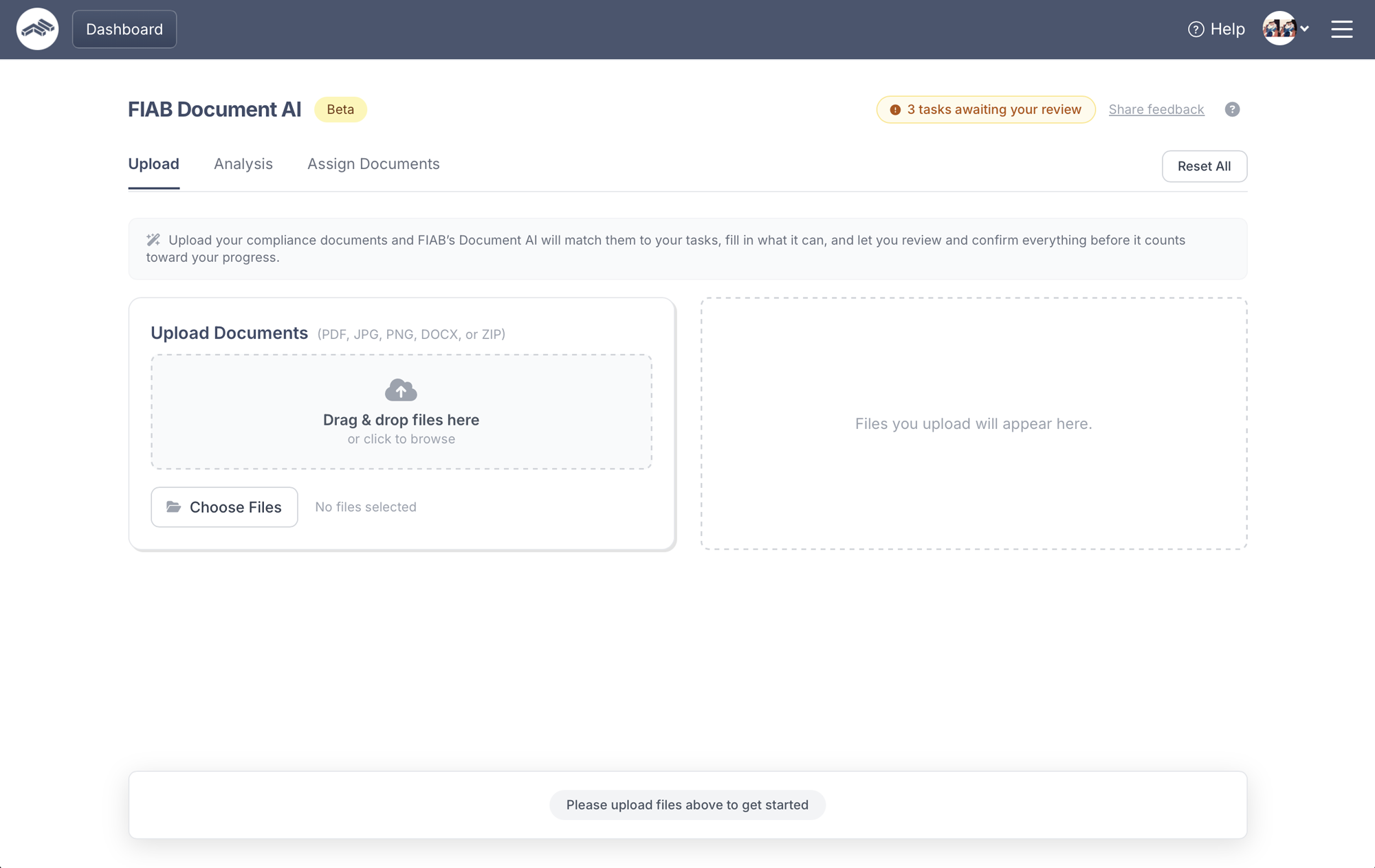
01 · Upload — compliance documents enter; the AI fills in what it can
and queues everything for human review before it counts toward progress.
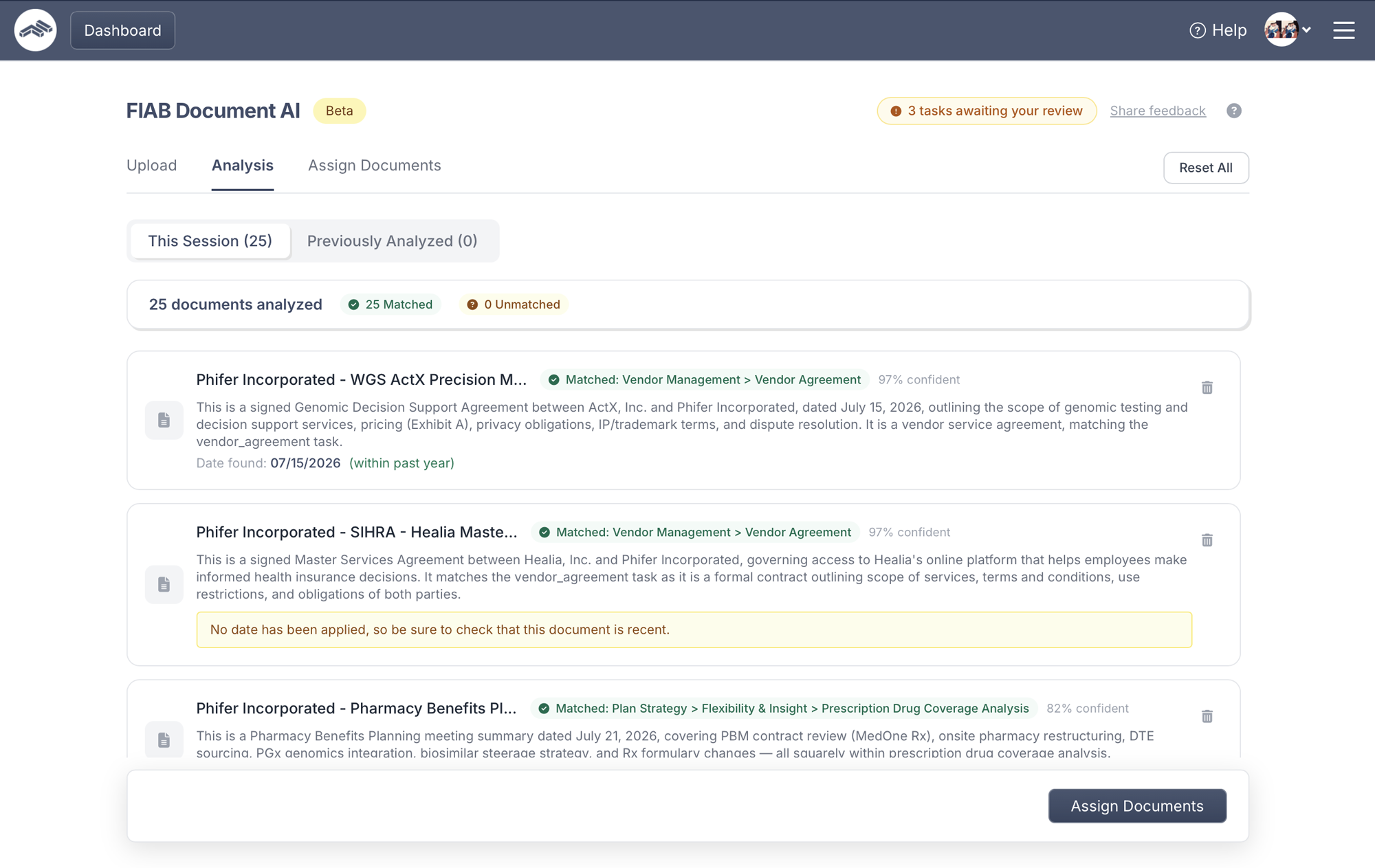
02 · Analysis — each document summarized and matched to its requirement,
with a confidence level and a flag on anything uncertain.
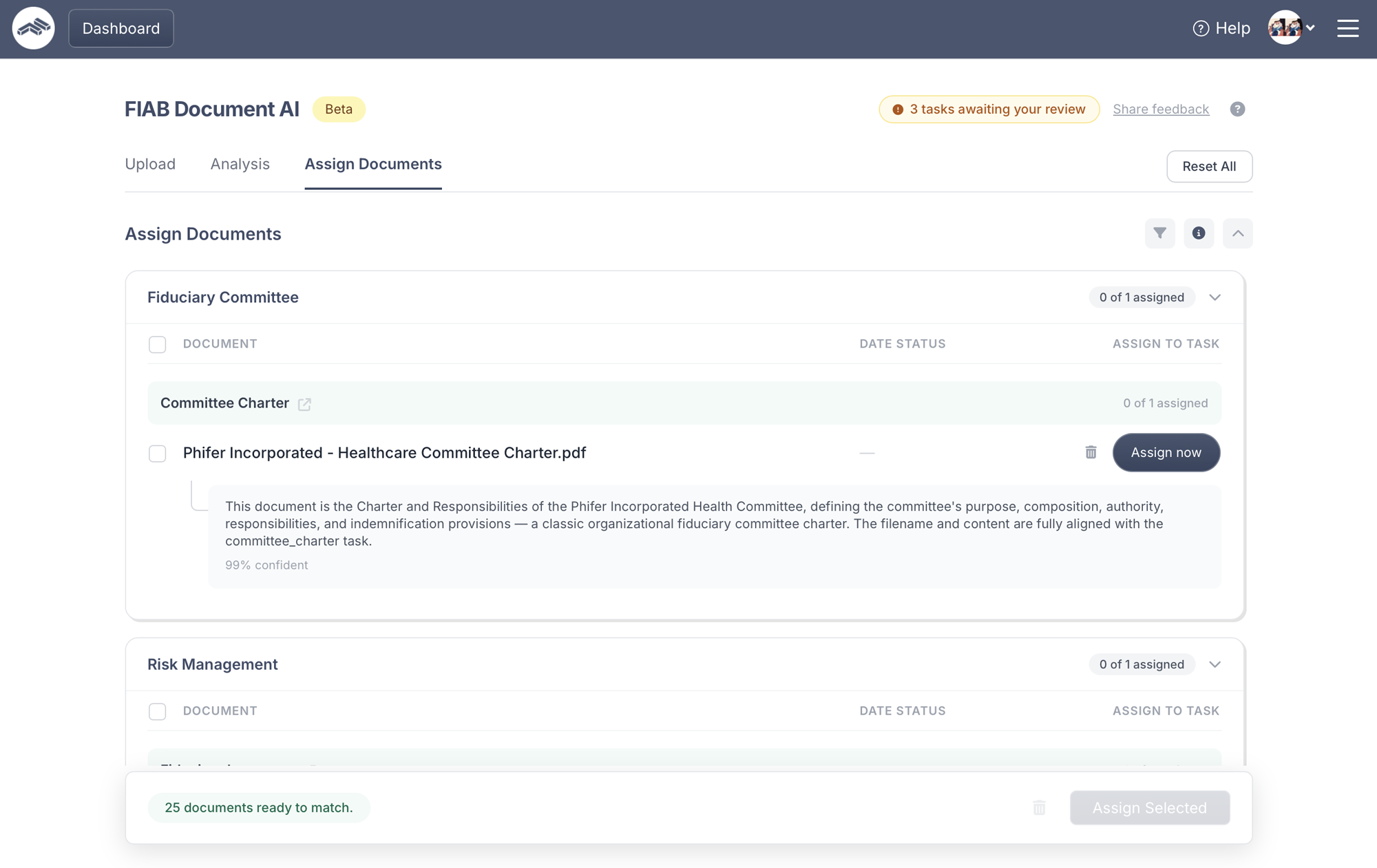
03 · Assign — the reasoning behind each match stated in plain language;
nothing is final until a person confirms it.
A macOS email client that merges multiple accounts into one place and tracks the
commitments buried in them — what you owe people, what they owe you — across Gmail, Calendar,
meetings, chat, and Slack. Started as a tool for my own inbox; now in private beta.
The commitments that matter rarely live in one tool. A request arrives by email, gets
discussed in a meeting, and is settled in chat — each platform holds a fragment, and none of
them can answer the only question that counts: what do I owe right now?
Lumeli began as a way to track "what I owe" across the platforms I use every day, folding
multiple email accounts into a single client and layering AI on top — including custom
voices for each contact type, so friends and professional clients are handled differently.
Idea to daily driver
The first working prototype was running in a day, built in TypeScript, React, and Electron
with Claude Code working from written specs, one vertical slice at a time. It was polished within the week, then updated continuously through a month of
using it as a real user — over which it grew from a simple multi-account client into a
commitment organizer that genuinely kept me on top of my tasks.
The beta has just launched. Before promoting it hard, I'm watching the data — validating
demand and traction comes before going full force.
The core interaction
Commitments surface as prioritized signals with daily briefings. Each signal tells the
story of a task as it moves across channels: someone makes a request by email, you confirm
it's complete in a Google Meet, and the loop evolves and closes on its own — no manual
bookkeeping required to keep the record honest.
The design stance
It is as much a wellness app as a productivity one: the interface is designed to make a
day's work feel finished and to keep you aware of a healthy balance, with a storybook feel
that deliberately shirks the usual AI tech aesthetic.
Privacy comes first. Mail is stored on the user's Mac, sign-in uses OAuth with PKCE, tokens live
in the macOS Keychain, and email content never reaches our server. A local pre-filter cuts AI
calls by an estimated 60–80%, and a thin Rails proxy enforces per-user limits.
01 · The front door — lumeli.ai sets the storybook tone before the app
does: one calm place to end your workday knowing nothing was forgotten.
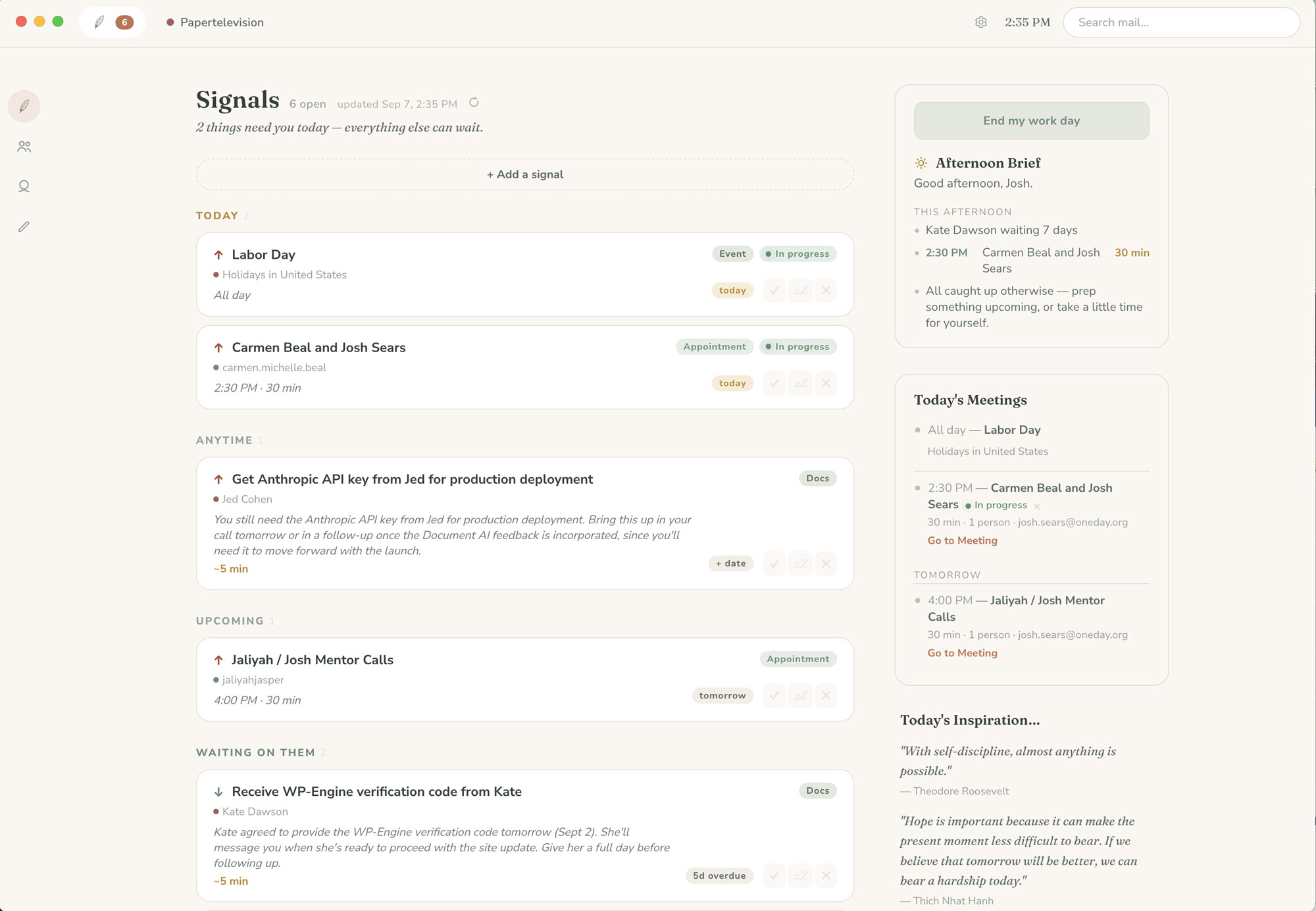
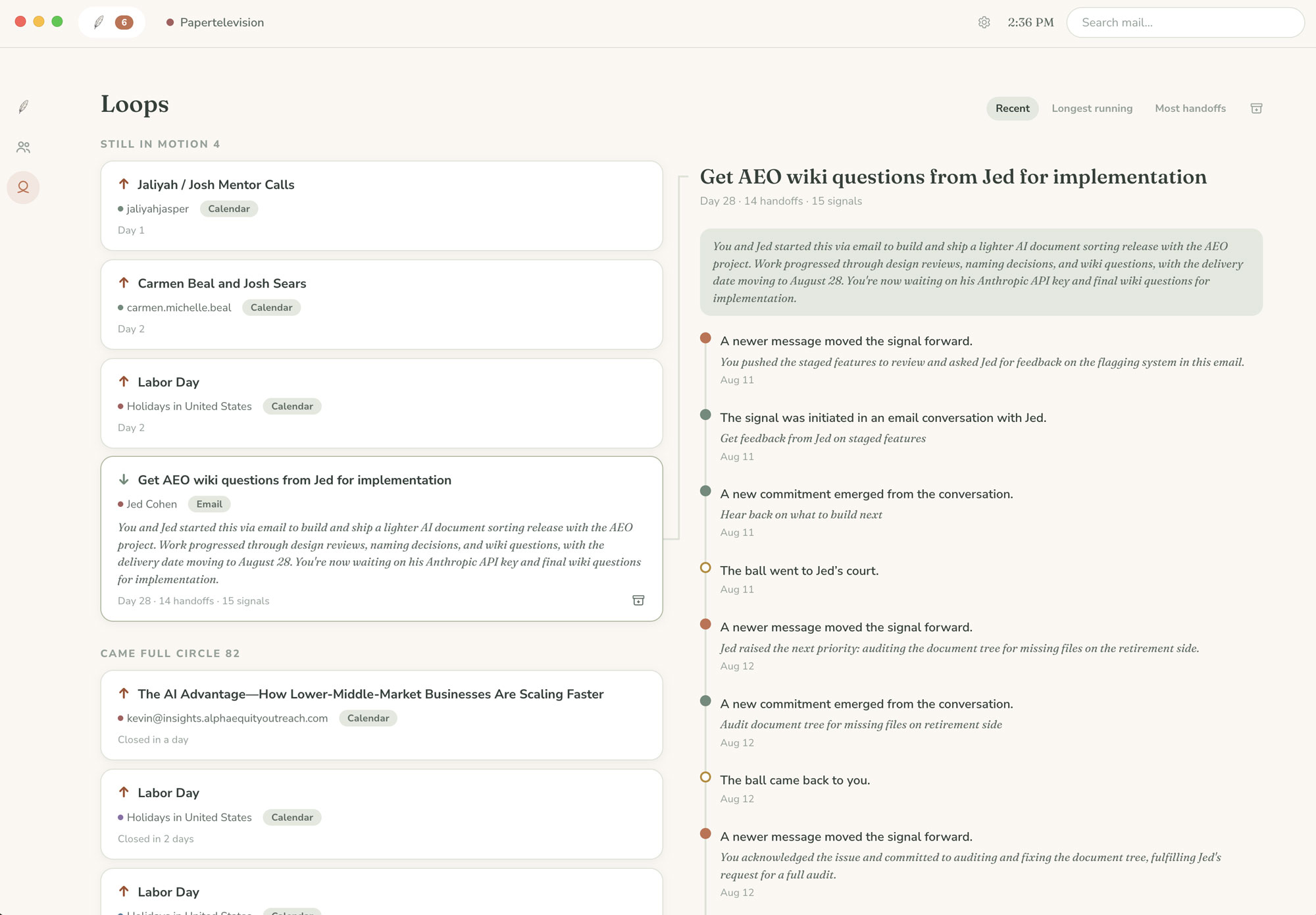
02 · Signals — the open commitments across every channel, triaged into
what needs you today; the brief opens with "2 things need you today — everything else can
wait."
03 · Loops — the story of a task as it moves across channels: handoffs,
new commitments, the ball changing courts, until the loop comes full circle.
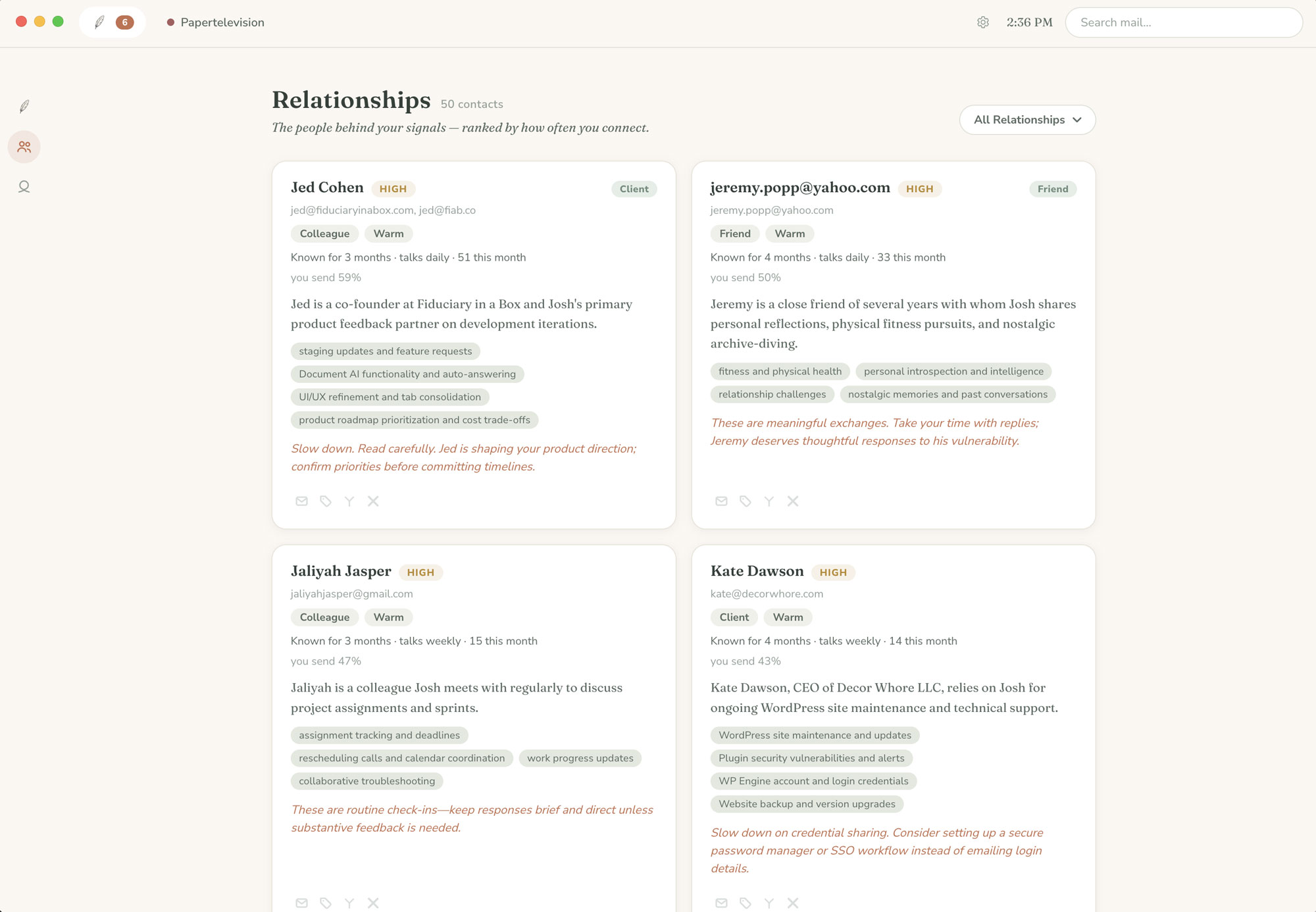
04 · Relationships — the people behind the signals, each with their own
voice: tone and pacing guidance that treats a client differently from a friend.
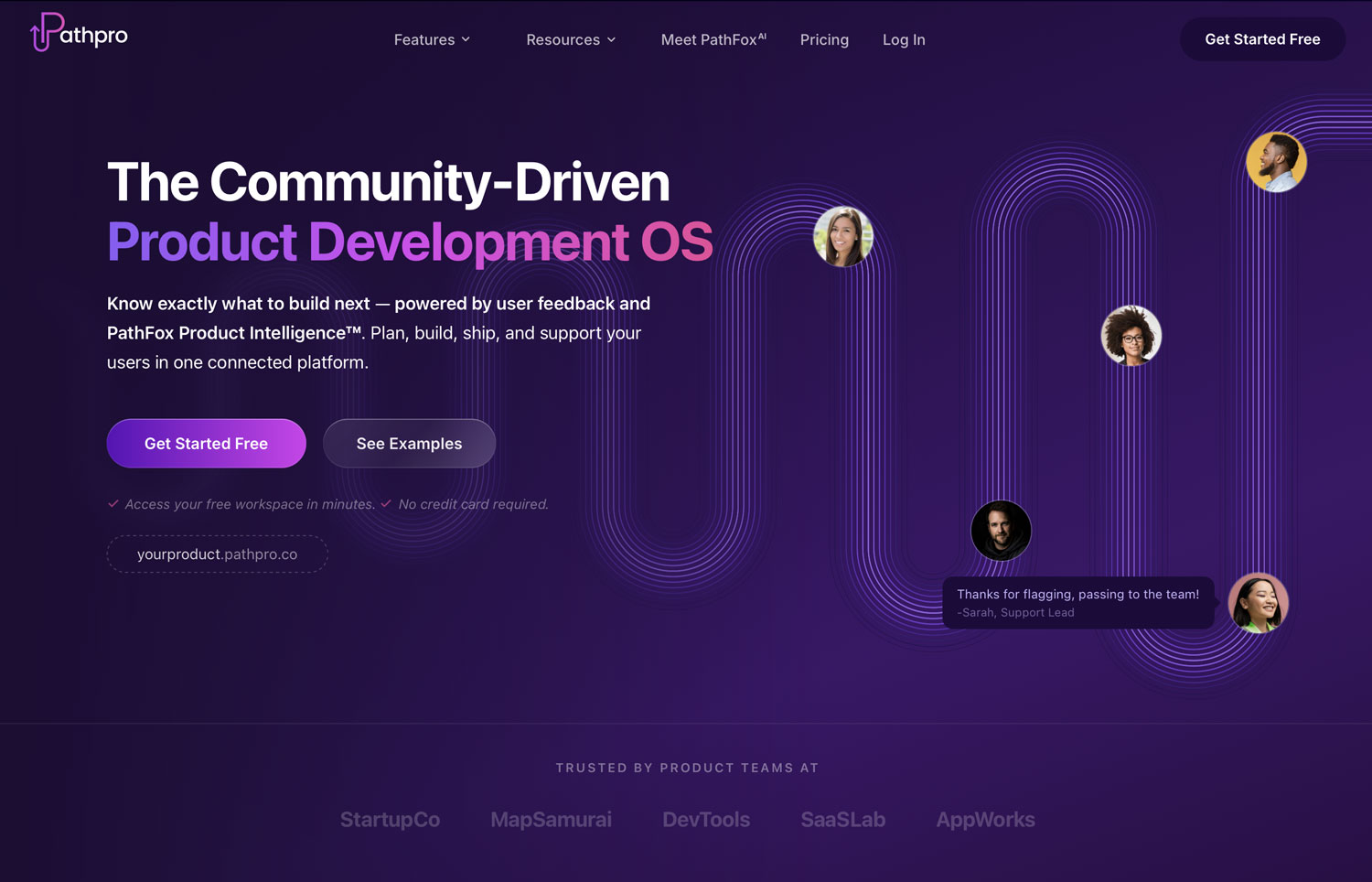
Product management platform that puts feedback collection and project management in one place,
so the decision about what to build next sits next to the evidence for it. I designed the product,
brand, and site, and built it: a responsive multi-tenant app, Stripe per-seat billing, and PathFox,
an in-app AI agent with 21 tools.
Platform & Site DesignAgentic AIStripe PaymentsPlatform DevelopmentDocumentationAnimations
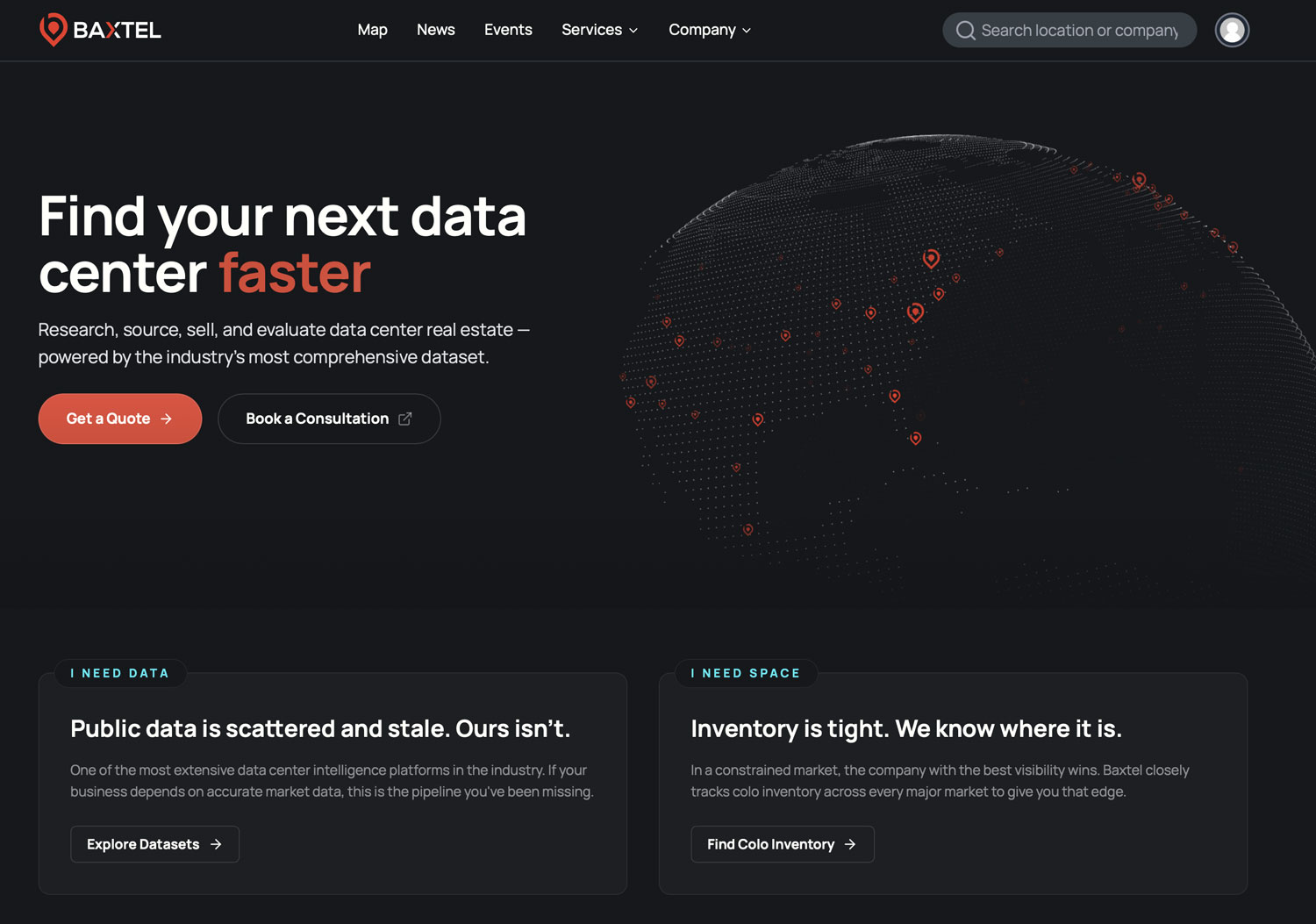
Data center intelligence platform used by operators, brokers, and enterprises to research,
source, and evaluate colocation capacity worldwide. Ongoing UX/UI and platform work inside a
large Ruby on Rails codebase with proprietary internal frameworks.
A remaster of the 1996 DOS game Azrael's Tear, rebuilt without source code by reverse-engineering
the executable. I directed about 80,000 lines through parallel Claude Code sessions sharing a
148-note knowledge base; mean frame time dropped 35 ms → 17 ms.
Players supply their own copy of the game.
Location-intelligence reports for businesses choosing a new site, sold at $149 each. I built and
run it end to end: Stripe checkout and webhooks, magic-link sign-in, Docker on DigitalOcean,
nightly backups, and Sentry monitoring.
Next.jsPrismaStripe
MapifyPro2014–2020 · Acquired
Mapping software that began as an $800 experiment and grew into one of the most widely used tools
in its category, with nearly $1M in total sales including its acquisition. I designed it, led the
development team I hired, set the roadmap from customer feedback, and marketed it.
Product DesignTeam LeadGrowth
How I build with AI
01 — Frame
Find the real problem underneath the request.
Usually it is not the one that was asked about.
02 — Spec & plan
A written spec and a plan of vertical
slices, plus a CLAUDE.md in each repo so agents start with the right context.
03 — Build
Claude Code builds one slice at a time; larger
projects run parallel agents that share a knowledge base of verified findings.
04 — Verify & ship
I review generated code, test it in a
real browser, and run automated tests and security scans before release. Then I watch what users do.